




Compare the Auris bluMe Pro and Audioengine B1. See how LDAC support, ESS Sabre 32-bit DACs, OLED displays, and digital outputs stack up for home audio.
When choosing a premium Bluetooth DAC to modernize a vintage stereo receiver or high-end integrated amplifier, two models lead the category: the Auris bluMe Pro ($149) and the Audioengine B1 ($189).
Both devices use high-grade aluminum housings, external antennas for extended wireless range, and dedicated ESS Sabre 32-bit digital-to-analog converters. Because both units target listeners who care about fidelity rather than disposable convenience, buyers often cross-shop them.
Looking at spec sheets and rear connection panels side by side reveals distinct engineering priorities that dictate how each unit integrates into your system.
Technical Specifications at a Glance
| Feature | Auris bluMe Pro | Audioengine B1 |
|---|---|---|
| Price | $149 | $189 |
| DAC Chipset | ESS Sabre ES9018K2M (32-bit/384kHz) | ESS Sabre ES9018K2M (32-bit/384kHz) |
| Bluetooth Version | Bluetooth 5.3 | Bluetooth 5.3 |
| Supported Codecs | LDAC, aptX Adaptive, aptX HD, aptX Low Latency, aptX, AAC, SBC | aptX Adaptive, aptX HD, aptX, AAC, SBC |
| Max Transmission Bitrate | 990 kbps (via LDAC) | 420-576 kbps (via aptX Adaptive / HD) |
| Max Sample Resolution | 24-bit / 96 kHz | 24-bit / 48 kHz |
| Display | High-contrast 1.3" OLED status screen | Single front pairing LED |
| Analog Outputs | Gold-plated Stereo RCA (2.1V RMS) | Gold-plated Stereo RCA (2.0V RMS) |
| Digital Outputs | Optical (TOSLINK) & Digital Coaxial | Optical (TOSLINK) |
| Wireless Range | Up to 100 ft (30 m) line of sight | Up to 100 ft (30 m) line of sight |
The Codec Difference: LDAC vs. aptX Adaptive
The primary sonic differentiator between the two receivers comes down to codec implementation: Sony LDAC support.
The Audioengine B1 supports aptX Adaptive, aptX HD, and standard AAC. These codecs deliver solid fidelity for everyday streaming. However, Qualcomm's aptX Adaptive caps data transfer between 279 kbps and 420 kbps (with older aptX HD peaking at 576 kbps) at 24-bit/48kHz.
The bluMe Pro includes full LDAC decoding. LDAC transmits up to 990 kbps at 24-bit/96kHz, roughly double the data rate of aptX HD and triple standard SBC Bluetooth. For listeners streaming lossless catalogs from Tidal, Apple Music, or Qobuz on an Android device or dedicated digital audio player (DAP), LDAC preserves upper treble air, cymbal decay, and dynamic range that lower-bitrate codecs compress.
For iPhone users, both devices negotiate Apple's preferred 256 kbps AAC codec. In AAC mode, the listening experience is dictated by the internal DAC and analog output stage.
The Value of an OLED Screen vs. Status LED
One practical frustration in high-fidelity Bluetooth streaming is confirming which codec your phone or computer negotiated.
Modern operating systems frequently downshift to standard SBC if connection strength dips or background audio apps conflict. On the Audioengine B1, a single LED on the front chassis indicates power and pairing status. It cannot tell you whether you are receiving an uncompressed high-bitrate stream or basic SBC compression.
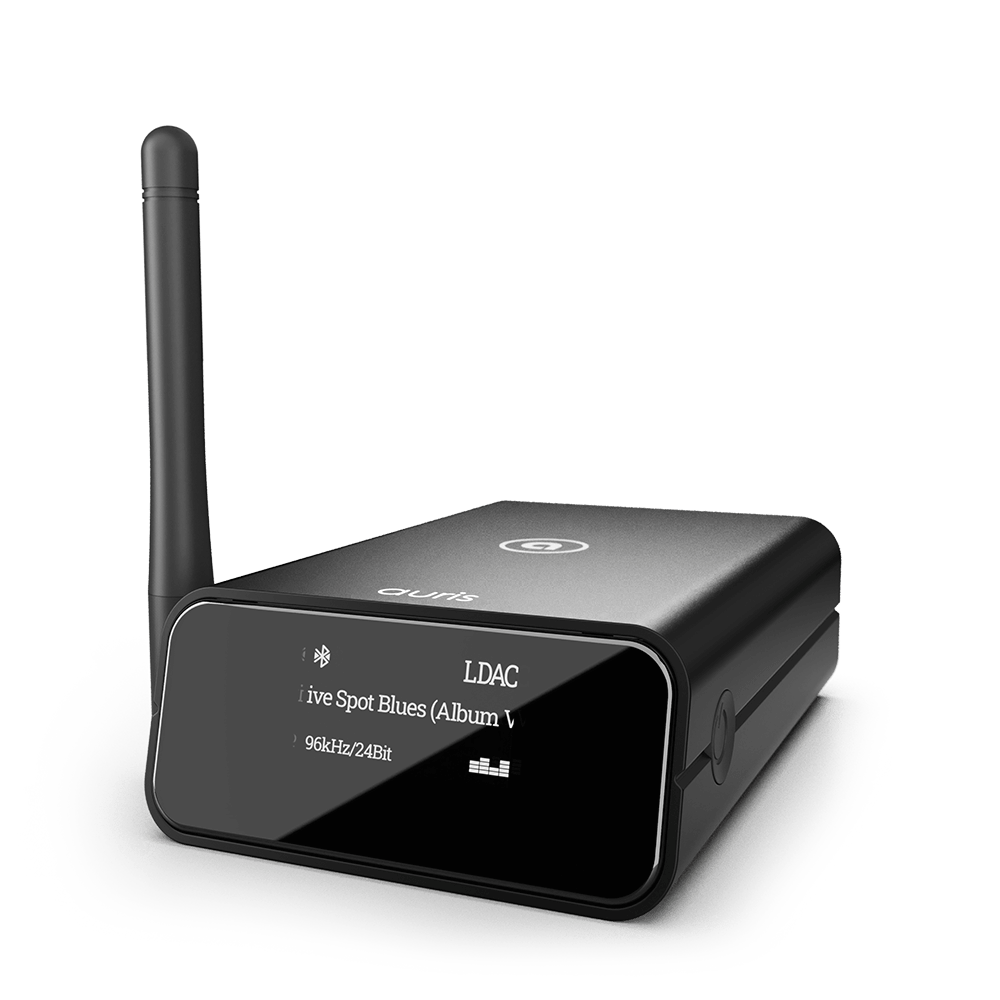
The bluMe Pro features a 1.3-inch OLED display on the front aluminum faceplate. In real time, it verifies:
- The negotiated codec (LDAC, aptX Adaptive, aptX HD, AAC, or SBC)
- The incoming sample rate (e.g., 96 kHz, 48 kHz, 44.1 kHz)
- Bluetooth pairing connection state
- Song and artist metadata where supported
This feedback eliminates guesswork when setting up streaming devices or adjusting developer audio settings on your phone.
Connectivity: Digital Coaxial vs. Optical Only
Both receivers feature line-level analog stereo RCA outputs designed to plug directly into an AUX, TAPE, or CD input on your receiver.
- Audioengine B1: Offers analog RCA out and a single optical (TOSLINK) digital output.
- bluMe Pro: Provides analog RCA out, an optical (TOSLINK) output, and a digital coaxial output.
Including coaxial SPDIF alongside optical matters if you route your Bluetooth feed into an external standalone audiophile DAC or modern digital preamp. Many vintage and modern digital components share single optical inputs with smart TVs or CD transports, leaving coaxial as the dedicated high-performance digital port.
Gain Matching and Preamp Output
In audio support tickets, audiophiles frequently ask about output voltage, especially when pairing a Bluetooth receiver with a passive preamp or low-sensitivity vintage amplifier.
- The bluMe Pro outputs a standard line-level 2.1V RMS via its gold-plated RCA terminals.
- The Audioengine B1 outputs 2.0V RMS.
Both voltages provide sufficient headroom to drive vintage Marantz, Pioneer, McIntosh, and modern integrated amplifiers without requiring artificial preamp boost or causing premature input clipping.
Which One Should You Buy?
Choose the Audioengine B1 if:
- You already own Audioengine ecosystem components (such as A2+ or A5+ powered speakers) and prefer a matching visual aesthetic.
- You listen almost exclusively via iPhone or iPad (where LDAC cannot be utilized) and prefer a simple status light without a screen.
Choose the Auris bluMe Pro if:
- You want the highest possible Bluetooth bitrate available (LDAC at 990 kbps / 24-bit / 96 kHz).
- You want visual confirmation via OLED of your active codec and incoming sample rate.
- You need coaxial digital output in addition to optical for connection to high-end external DACs.
- You want flagship ESS Sabre 32-bit conversion at $149 compared to $189.
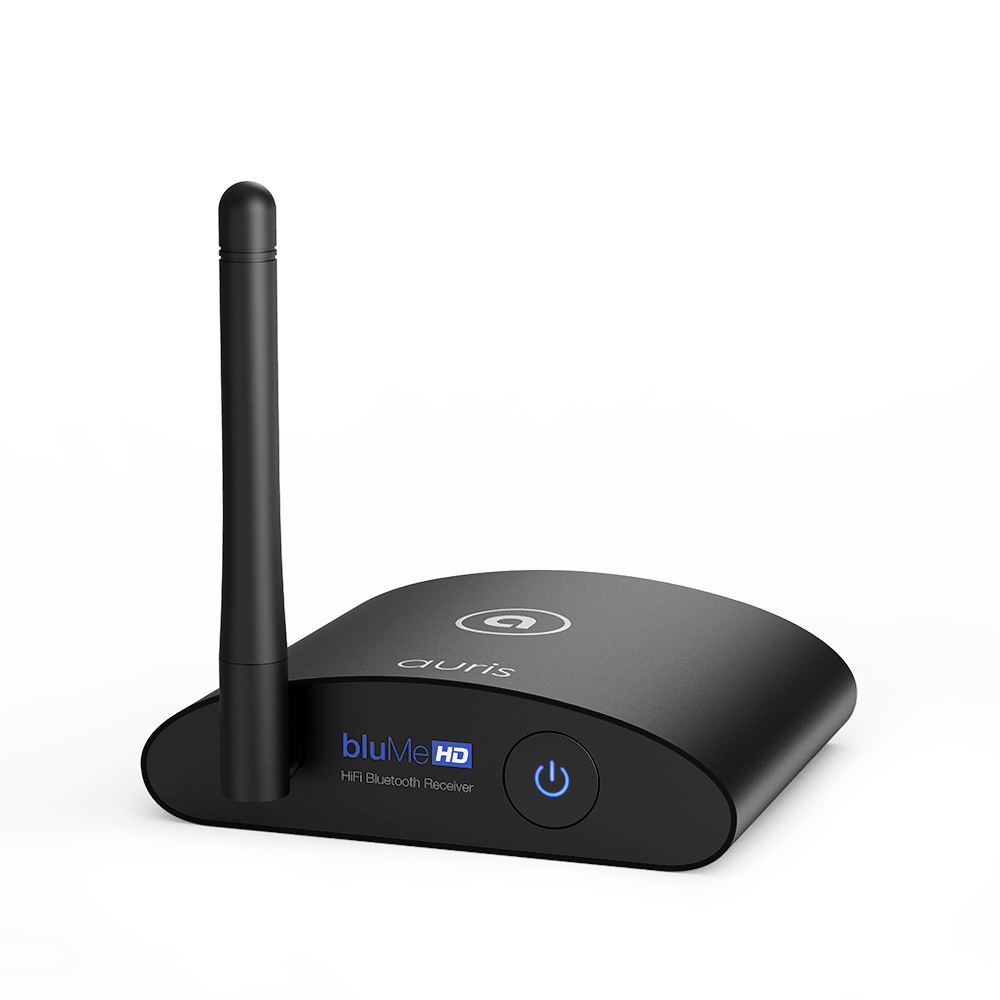
Learn more about the technical architecture and specifications on the Auris bluMe Pro product page. If your system requires a more compact footprint without an OLED display, explore the Auris bluMe HD ($99), which retains LDAC support and Burr-Brown DAC conversion.


